ME Vs RT-Flex Engines

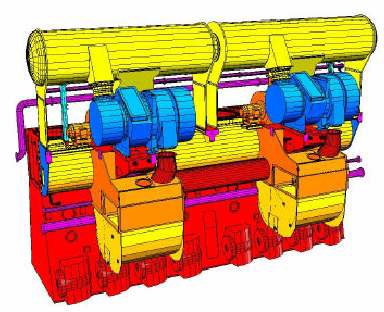
Comparision between ME and RTFlex engine

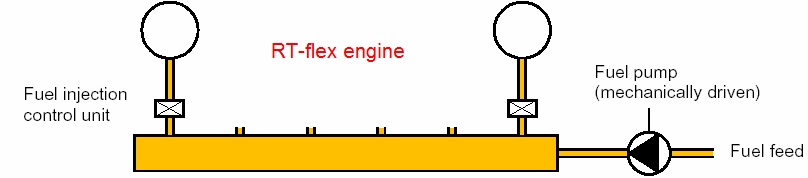
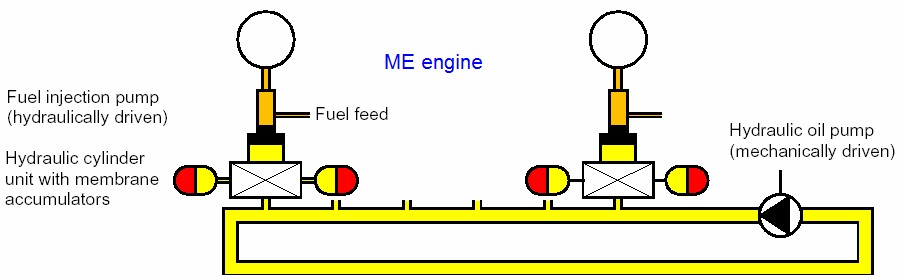
   ■ Main design  difference

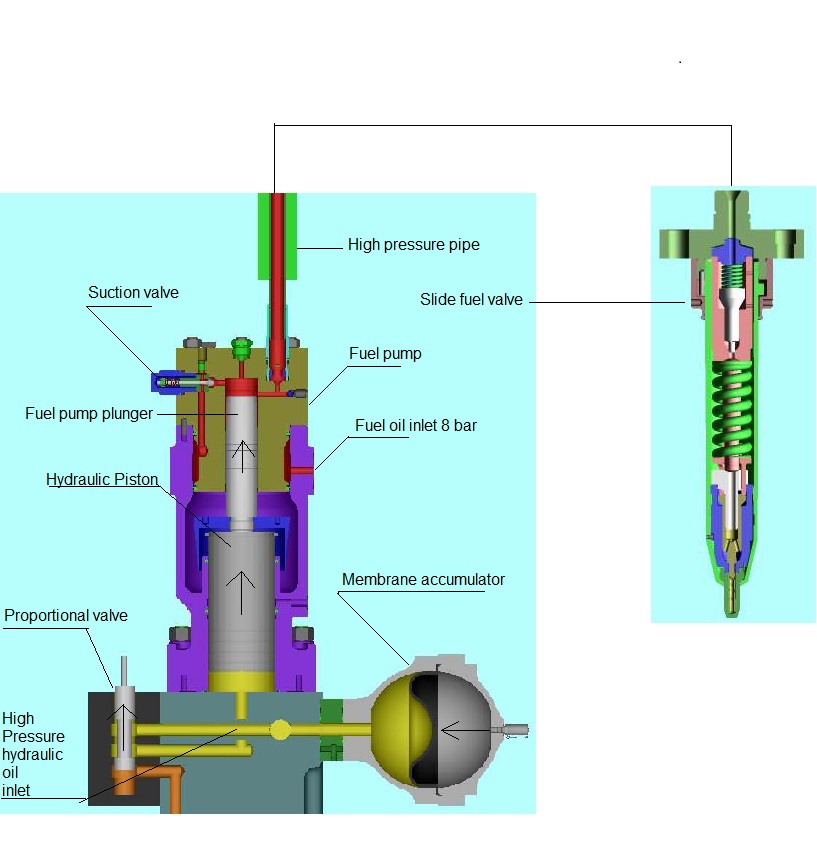
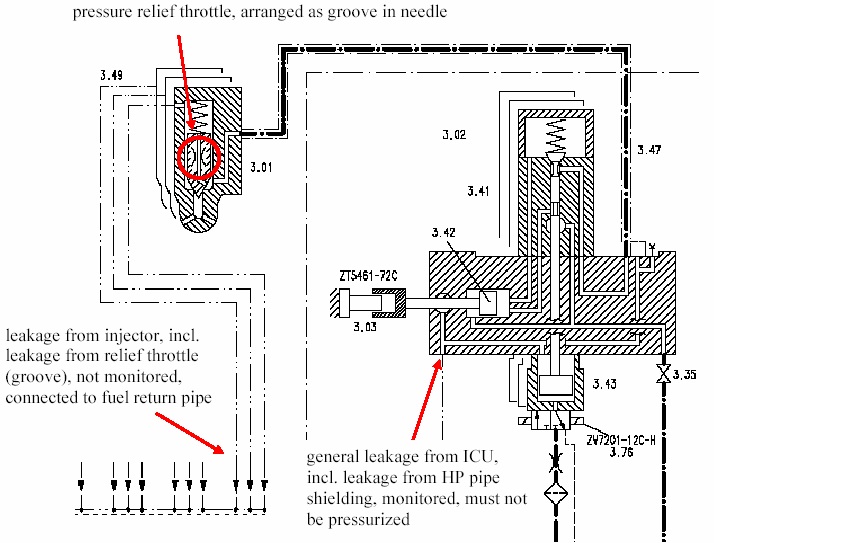
  • Combined  pressure  generation and injection rate shape control
  • One complete  electro-mechanical hydraulic pump system per cylinder
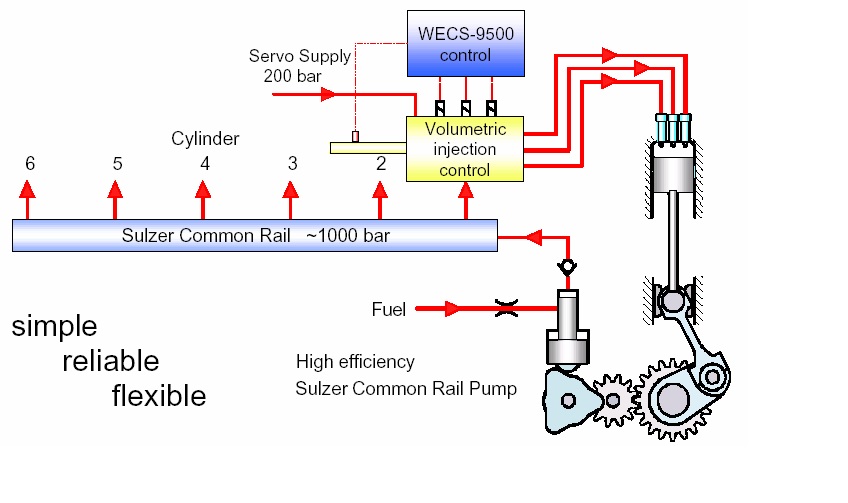
  • Common rail vs. fuel is brought to high pressure  at every cylinder station
  • Single injection nozzle operation vs. no single injection nozzle


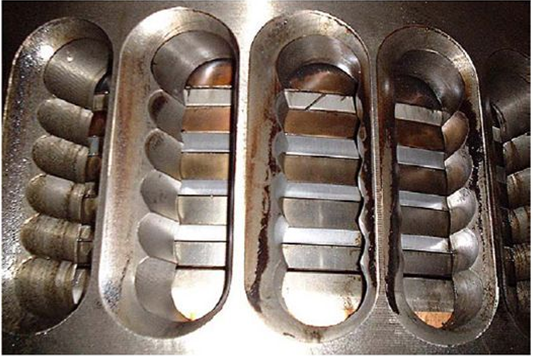
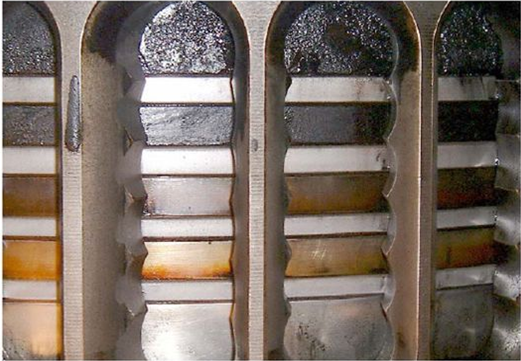
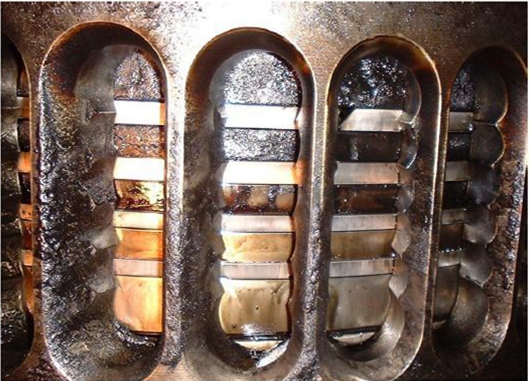
Under-slug receiver is WCH’s standard
for all new RT-flex96C/RTA96C engines

Advantages

  • Increased margin against water carry over
  • Simple welded construction
  • Easy assembly
  • Gallery arrangement for easy cooler dismantling
  • Cooler arrangement for easy and efficient cleaning


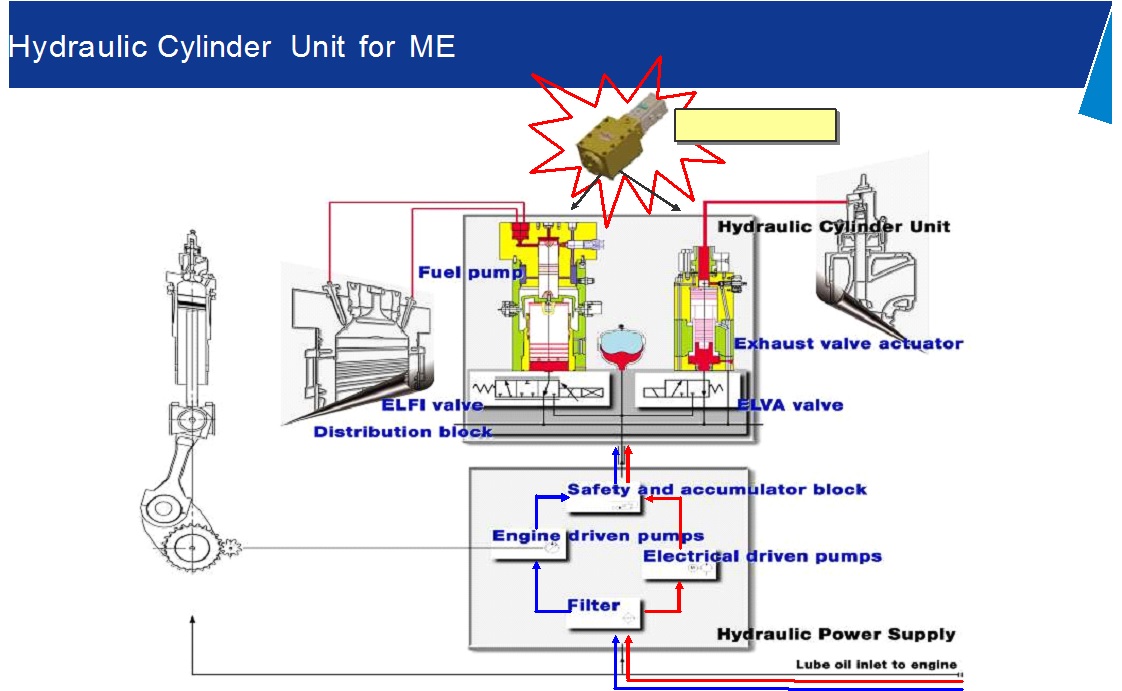
Hydraulic Cylinder Unit

The HCU, one per cylinder, consists of a support console on which a distributor block is mounted. The distributor block is fitted with a number of accumulators to ensure that the necessary hydraulic oil peak flow is available for the Electronic Fuel Injection(ELFI) and the Electronic exhaust Valve Activation(ELVA) systems.


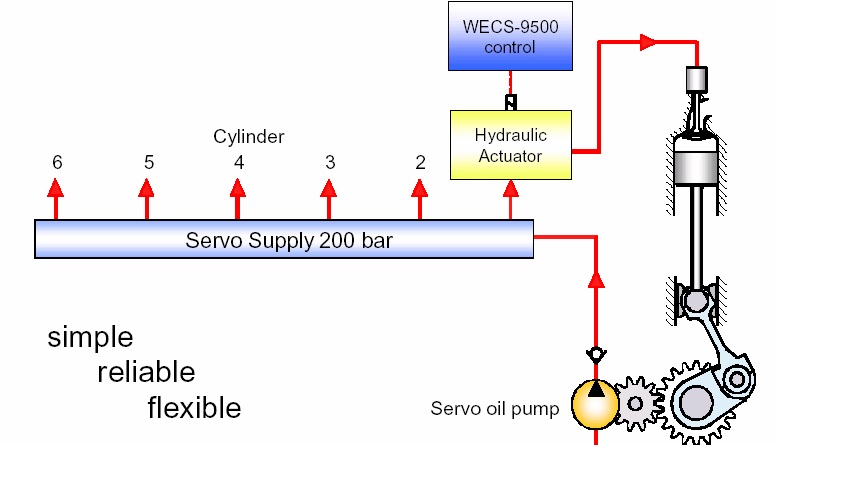
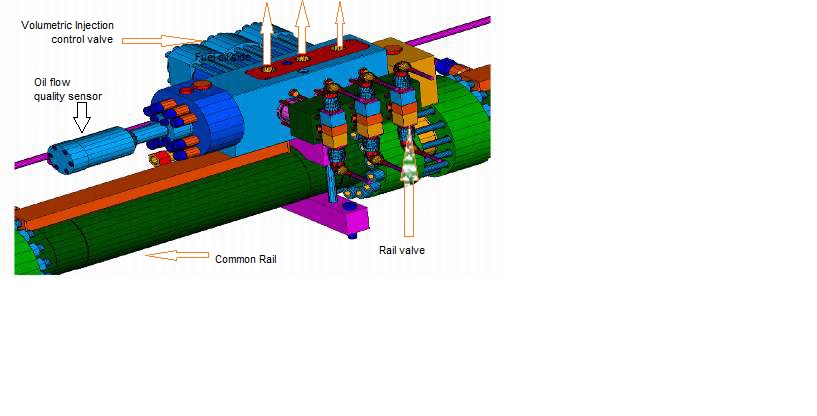
Common Rail system for RTFlex

Fuel system


Exhaust Valve Drive


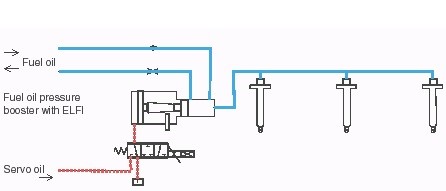
Fuel oil pressure booster with ELFI for ME (Elec. Fuel Injection)


Fuel oil injection control valve with fuel valve for RT-flex (Elec. Fuel Injection)

  • Shapes injection pattern
  • Enables individual operation of every single nozzle
  • Ensures precise fuel amount injected to each cylinder


Engine RPM signal

Measuring Engine RPM signal

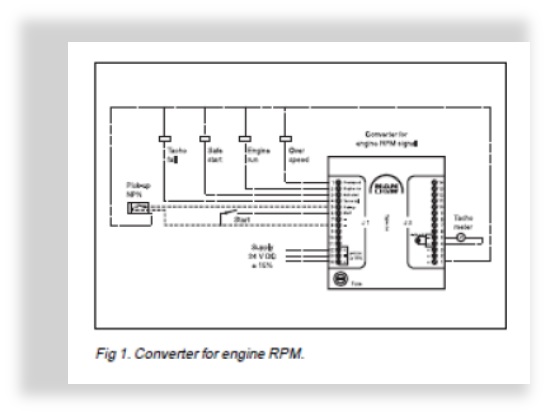
For measuring the engine's RPM, a pick-up mounted on the engine is used giving a frequency depending on the RPM. To be able to show the engine's RPM on an analogue tachometer, the frequency signal is sent through a fil converter {frequency/current converter), where the signal is transformed into a proportional 4-20 mA – 0-1200 RPM signal.

Further, the converter has following signals:
–   overspeed
–   engine run
–   safe start
–   tacho fail
 

Overspeed
When the engine speed reach the setpoint for electronic overspeed the converter gives a shutdown signal and an alarm signal through a relay.

Engine run
When the engine speed reach 710 RPM or 200 RPM + 10 seconds the converter gives a '''engine nut" signal.
The engine run signal will be deactivated when the speed is .640 RPM. If the engine speed haven't been over 710 RPM the signal will be deactivated at 200 RPM.
The "engine run" signals will be given through a relay. One for synchronizing and one forstartistop of pre. lub. oil pump or alarm blocking at start/stop.
Safe start
 
When the safe start signal is activated the engine can start. When the engine reach 140 RPM the air starter will be shut-off.
Further, the safe start signal is a blocking function for the air starter during rotation.
Tacho fail
The tacho fail signal will be on when everything is normal. If the pick-up or the converter fail s the signal will be deactivated. E.g. if there is power supply failure.

Turbocharger RPM signal

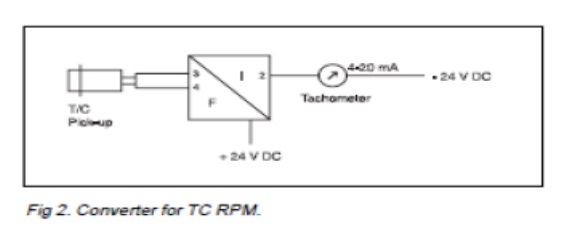
For measuring the turbocharger RPM, a pick-up mounted on the engine is used giving a frequency depending on the RPM. To be able to show the turbocharger's RPM on an analogue tachometer, the frequency signal is sent through a f/1 converter (frequency/current converter), where the signal is transferred into a proportional 4-20 mA0-60000
RPM.The converter for engine RPM signal is mounted in the terminal box on the engine.


Service air compressors- Some real life problems experienced onboard

The ship just departed from the port of newyork ar

1.The ship just departed from the port of newyork around midnight. Temperature outside were subzero. The very next day I was asked to provide deck service air for deck maintanance jobs. As usual all I have to do was open a valve. But this time as soon as I opened the valve the pressure of service air bottle started dropping rapidly. The service air compressor was not able to meet the required air demand. At first I thought that they might have opened to many air connections for use. So i called to bridge and asked if they are using too many connections. But I was told that only one connection was in use and they are not receiving the required pressure.  The first thing came to my mind is that there might be some air connections  opened in e/r also or there is some leak somewhere. So I went to look  for service air leaks in e/r and I found none. I now decided to first ensure that my compressor is ok. To ensure this I just closed the outlet v/v of service air bottle. After closing the valve the pressure inside tank started rising and the time taken to reach the pressure was also normal. The compressor cut out at set pressure. Now I opened the service air bottle discharge vlave and the story was same. Pressure  rapidly dropped. I came to the conclusion that there must be some leak in service air line. Luckily there were separate valves for deck and engine room service air lines. The pressure was dropping after opening the deck service valve only.
I informed chief engineer regarding the situation. After discussing with chief officer, deck crew were sent to lookout for any air leaks on deck. After an hour we were informed that there are no leaks. But chief engineer was sure regarding any major leak in deck service air line. Any major leak can be clearly identified by its hissing sound. So we came to conclusion that air must be leaking at some space which was not visitedvthat day and  provided that we just came out of subzero temperatures, there was always a possibility that any condensed water in service air line might have freezed-expanded and ruptured the line, and this water must have collected to the lowest point or any trapped section of line. So we took the line diagram and started to check the service line one by one paying special attention to the lowest service air points.  After some time in bosun store we found a ruptured service air line. The ruptured section was removed, a new line was fabricted and fitted in place. Now the deck service valve was opened and all was working fine.

2. The ship was sailing in indian ocean in the month of may. The service air compressor  discharge air temperature high alarm was coming. I had just joined the ship and was told that all attempts have been made to rectify the problem including air-oil cooler cleaning and was found that in hot regions it usually gives this alarm. I found  the enclosing cabinet of service air compressor was opened and air was directly blowing to the cooler with a seperater blower duct and an electric blower. I was told that there is some problem with the location of cooling air intake of service air compressor, that’s why a separate blower and trunking was arranged to blow directly cool air to the cooler. Well with this arrangement the compreesor was running just ok. With limited air use it was ok but after opening even two-three connections the high temp. Alarm was coming. However after one week we enetered the colder region and the ship was now heading towards usa. The service air compressor was running ok without the separate blower arrangement. I was convieneced with the separate blower trunking arrangement. 
After one month we were back sailing towards india and while crossing suez canal the same alarm started coming. We instaleed the same arrangement and this time somehow compressor managed with just one air connection opened. Two days later compressor was now giving continuously high discharge air temperature alarm. 
I decided to open the air-oil cooler for inspection and cleaning. I put the air-oil cooler in chemical and after cleaning put back in use, but the problem was not solved. Including this a total of three times the cooler was cleaned within a month which generally is cleaned yearly.  I changed the oil filters , oil seperators and even system lub oil but the result was same. 
Later I took an infrared gun to monitor the heat exchange process in cooler( there were no thermometers in line of oil and air). I found that oil was not getting cooled at all and the same hot oil was injected back to air compressor. I suspected this might be the problem. But the cooler was already cleaned. So I decided to open the cooler one more time and have a close inspection. All was found well. But still I decided to clean it one more time. This time instead of just dipping it into the chemical I decided to clean it with circulating the chemical to get an idea of inside passeways which were not visible. The arrangement was made and cleaning was started. At first the chemical solution coming out of cooler was clear but after an hour of circulation I noticed a lot of mud coming out . It took almost 8 hours of continous circulation to get a clear mud free appearance of outcoming chemical solution.
After that a fresh water circulation was carried out to remove any residual chemical from inside, the cooler was dried and put in place inside the system. The compressor was now tried out and found running ok irrespective of the number of air connections in use and engine room temperature.

3. The very next contract on an another vessel I found the same problem of air discharge high temperature alarm. Being overconfident without investigating the cause I decided to open the air-oil cooler and clean it by chemical circulation.  The same was cleaned and  fitted back in place, but the problem still persisted.
Now I had no other option but to check temperature of each piping system with an infrared gun. I  opened one of engine room service air valves just enough to keep air compressor running  but not to get tripped on high discharge temperature. While monitoring the temperature I found that the oil line going to cooler after thermostatic valve was cold and the thermostatic valve return line going back to the air compressor very hot.  It means that the thermostatic valve was malfunctioning and instead of sending hot oil to cooler it was directly sending it back to compressor. The thermostatic valve was changed and compressor was tried out. It run smoothly during my tenure onboard.
 

Pictorial guide for ME liner inspection

Frequent inspection of liner is required in order

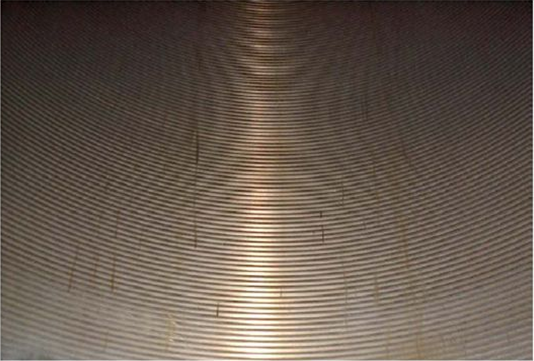
                                  1. ​BEST CONDITION: Machining mark remains completely.
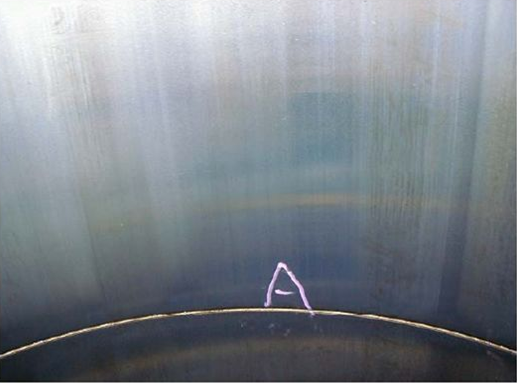
      2.ORDINARY CONDITION: Machining mark has been disappeared/ Liner surface smooth & well lubricated.
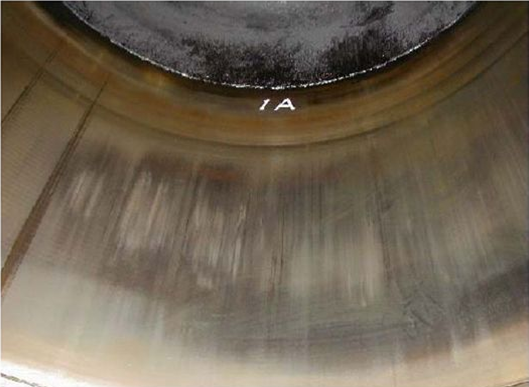
                  3. BAD CONDITIION: Dark patches on liner/ Scoring marks visible/ Liner surface dry.
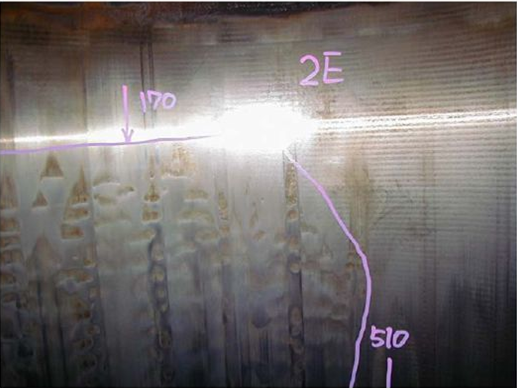
                                 4. SULPHURIC ACID CORROSION: Low temperature corrosion.
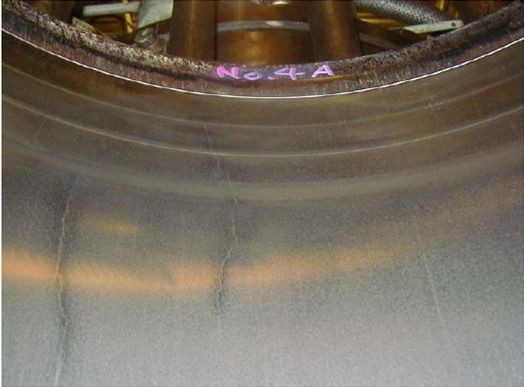
            5. STEP WEAR & CRACK: There is step wears at position of TDC, also vertical crack can be seen.
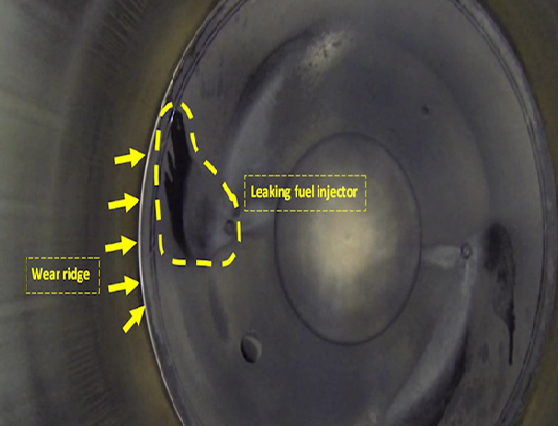
                                                                       6. Fuel injector leaking/faulty

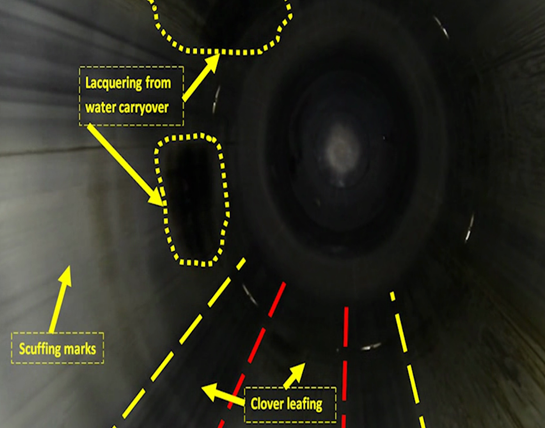
                                                               7. Clover leafing of cylinder liner
Guide for assesment of piston ring condition

Pictorial guide for piston ring inspection


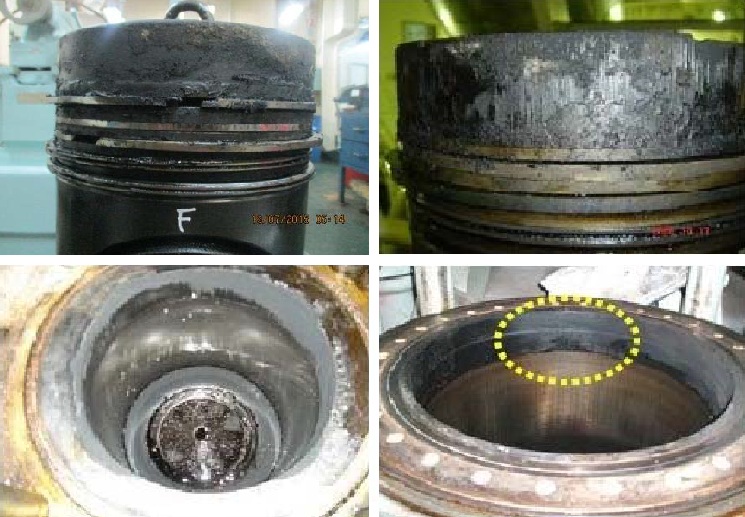
1.BEST CONDITION: Ring surface shiny & smooth/ Chamfer on top & bottom edges of rings present/ No carbon between piston rings/ All rings sealing.


2. GOOD CONDITION: Exhaust gas is sealed at # 2 ring.


3.ORDINARY CONDITION: Exhaust gas is sealed at # 3 ring.

4. WORSE CONDITION: Exhaust gas is sealed at # 4 ring.
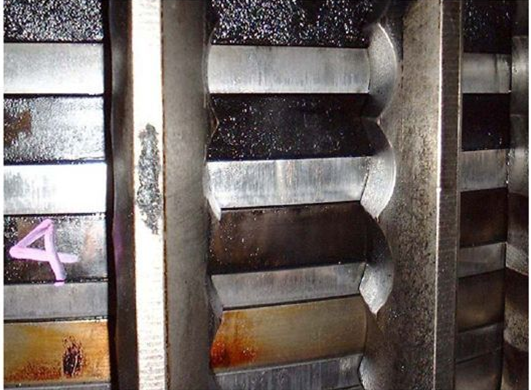
5. PISTON RING SCUFFING: Scuffing can be seen at all piston rings/ Micro seizures can be seen on ring surface/ Edges of rings are shart due to wear.
Introduction of new CPR Ring by MAN B&W

A Number Of Incidents Came In Focous With High Top

A Number Of Incidents Came In Focous With High Top Ring Wear On Our Small Bore Engine Types 26 To 50. For This Reason, MAN B&W Has Introduced A New Piston Top Ring As Part Of The Standard Ring Pack Configuration For Their Two-stroke 26-50 Bore Engines.
         On Small Bore Engines, The Smaller Depth Of The Controlled Leakage (CL) Grooves Reduces The Wear Potential Of The Piston Top Ring Compared To The Large Bore Engine Types. In Some Cases Premature Wear Out Of The Controlled Leakage (CL) Grooves On The Top Ring Running Surface Can Be Seen. As A Result, The Pressure Drop Over The Top Ring Increased Further And Caused Increased Wear On The Top Ring, As Well As A High Liner Wear Rate And An Increased Ring Groove Wear.
        To Remove The Negative Influence From Worn Out (CL) Grooves, MAN B&W Has Introduced An Alternative Ring Type To Replace The CPR-CL Ring. The New Ting Type Is Called CPR-POP (Port-On-Plane).
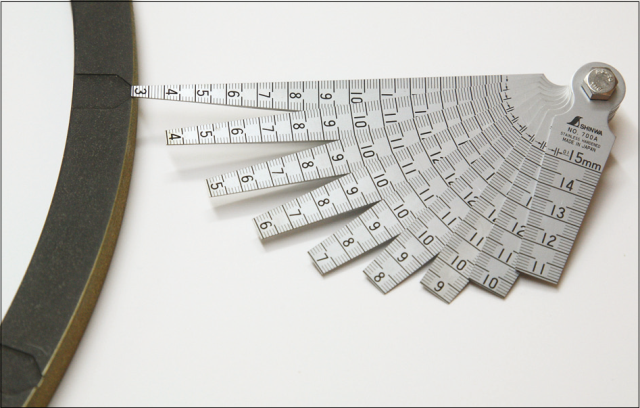
Image TextThe Main Configuration With The Double S-lock And Gas Relief Grooves Remains Unchanged. The CL Grooves On The Runing Side Have Been Omitted And Replaced With A Number Of Ports Milled Into The Lower Side Of The Piston Ring These Passages Have Been Configured With A 90 Degree Narrowing, Causing The Ring To Increase The Bypass Area As The Ring Wears, Instead Of Reducing It When The Minimum Depth Is Reached, As Is The Case With The CL Grooves.
        Thereby, The Pressure Drop Decreases Instead Of Increases. To Measure The Wear Of The Ring, The Width Of The Leakage Passage Can Be Measured Using A Feeler-gauge-type Measuring Tool. The Opening Is 3 Mm From The Beginning, And The Milled Passage Is Designed In Such A Way That For Every 1 Mm The Ring Is Worn Radially, The Gap Opens 2 Mm. Table 1 Lists The Maximum Allowable Width Of The Leakage Gap For Our Small Bore Engines.

Caution
There Is A Risk Of Liner Surface Hardening When Running With A Wornout Top Ring. Also There Is High Increase In Liner And Ring Wear Rates After Installing New Rings In A Liner Suffering From A Hardened Surface Can Occur Due To Running With Worn-out Piston Rings.If The Oil Film Between The Cylinder Liner And The Piston Rings Is Damaged, Adhesive Contact Will Occur, Followed By Temporary High Temperatures On The Surface And, Subsequently, Cooling, Results Hardening Of The Running Surfaces.
       To Ensure Normal Wear Rates And Eliminate Surface Hardening,the Liner Surface Must Be Machined By Honing Or Grinding.

Consequences of Low Load Operation of Diesel Generators

Q. What Is A Cylinder Liner Protection Ring & What

Q. What Is A Cylinder Liner Protection Ring & What Is Its Purpose?
Ans: The Cylinder Liner Protection Ring Is Located At The Top Of The Liner And Its Existence Purpose Is To Protect The Liner From Thermal And Mechanical Fatigue From Combustion.

Q. Why Sometimes It Causes Problem In The Turning Of Engine?
Ans: When Engine Stopped For Long Time, Carbon Compound Which Adhered To Protection Ring And Piston Top Rand, With Absorbing Moisture, Is Swollen And The Piston Which Is In Top Position Sticks To Protection Ring, Eventually Causes Engine Turning (or Engine Starting) Impossible. So, If Engine Is ST/BY For Long Period, A Hand Turning To Be Done Every Alternate Day, While Blow Through Once Per Week.Image Text

Q. What Is The Reason Of Such Deposits On The Protection Ring?
Ans: Deposit Of Combustion Residue Due To Using Nonflammable Fuel And Low Load Operation Is The Reason, But Abrasion Of Protection Ring Which Invalidates Its Function Of Raking Out Carbon Compound Is Regarded As One Of The Reason. Using Protection Ring Which Exceeds Abrasion Limitation Might Cause Stick By Combustion Residue. In Every Maintenance, Practice Protection Ring Measurement And If It Exceeds Limitation Of Abrasion, Replace With A New One.

Q. How To Take Out A Stuck Protection Ring?
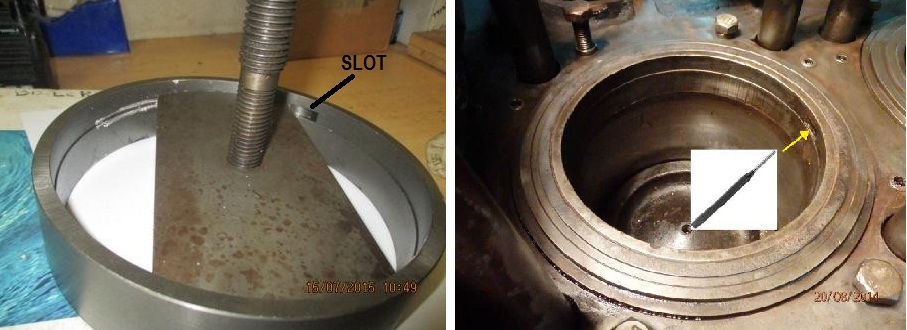
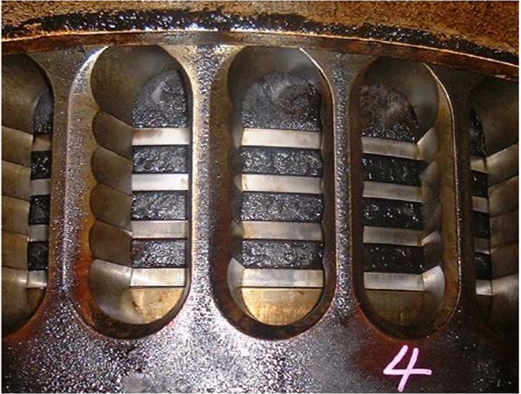
Ans: Sometimes The Protection Ring Does Not Get Easily Extracted, Due To Excessive Carbon Deposits And The Extracting Implement Gets Damaged During This Effort. In This Case, The Solution Lies In Punching The Protection Ring (at The Slots – See Photo Below) Upwards (PRIOR Using The Extracting Implement) Using A Pin Punch, Then Punch The Protection Ring Top Peripheral Surface With A Plastic Hammer And After Use The Extracting Implement.
Image Text

Service air compressors on board ship

Service air compressor onboard is used for low pre

FUNCTION AND CONSTRUCTION
Service air compressor onboard is used for low pressure air compression (around 7bar) which is used as general purpose air( cleaning, filter cleaning, operating pneumatic hand tools and pumps, ship air horns)  and also for control air for different pneumatic control systems (blower dampers, E/R control air, air operated quick closing valve system, air for boiler burner etc.). It is the responsibility of fourth engineer to maintain  this to best of its effeciency. Screw compressors are very reliable and only timely maintanance routines such as filter and seperator change are enough to have smooth operation.
In this series we will discuss every aspect of service air compressor starting from general introduction to different case studies regarding malfunctioning of service air compressors on board ships. This series also includes FAQ regarding maintainance and construction of service air compressor.

FUNCTION: 
Air is taken in via suction air filter. The clean air, filtered of dirt and dust, is sucked into screw-end. This air is compressed at screw-end and transferred to oil separator, together with a lot of cooling oil, which has also been injected during the operation. Air and oil are separated within oil tank and oil separator. The separated air goes through minimum pressure valve and is transferred to the after cooler, which cools down the air (Please note that there is no separate oil pump in service air compressor, min pr. v/v holds the air till air pressure rises to a certain value inside the tank, after that it allows air to go through aftercooler. The compressed air inside oil tank provides required pressure to oil.)
The cooled air is then transferred to air reservoir. On the other hand, oil in separator element is transferred to oil filter and then to cooler, pushed by air pressure inside separator and finally reinjected to screw end. Here the oil is cooled by the cut in and cut out of oil/after cooler fan according to the temperature (some models also have thermostatic valve after oil tank which transfer the oil directly to air end if the oil temp is below certain temp e.g. 75°c. if temp is more thermostatic valve sent fraction of oil to oil/after cooler accordingly and finally oil is reinjected to screw end for lubrication and cooling.)
A branch is bled from oil/air tank as control air which is supplied to unloader or air control valve through separate piping.
When unloading inner pressure of oil tank, is exhaust to the atmosphere side of unloader.

DIFFERENT PARTS AND THEIR FUNCTION:
Suction filter– Its purpose is to remove dust from inlet air. It contains dry-type element to remove dust of more than about 10 µ. It is provided with maintenance indicator/ differential pressure indicator for suction filter.
Unloader-  It is mounted on air inlet of screw-end. This unloader functions to reduce load at starting and to regula
te pressure by automatically openingAnd closing inlet port during the operation and limiting the air flow. This is controlled by pressure switch and solenoid valve.

Screw-end (Compressor body)- Screw-end is composed of male rotor with n lobes and female rotor with n+1 sockets. Each rotor is supported by a roller bearing and 2 pieces of tapered roller bearing. As the rotor turns and air is sucked from upper inlet port and is compressed in the space between casing and rotors. Compression continues until the space comes to the outlet port at bottom side and the air is exhausted.

Screw-end (Compressor body)- Screw-end is composed of male rotor with n lobes and female rotor with n+1 sockets. Each rotor is supported bya roller bearing and 2 pieces of tapered roller bearing. As the rotor turns and air is sucked from upper inlet port and is compressed in the space between casing and rotors. Compression continues until the space comes to the outlet port at bottom side and the air is exhausted.

Oil separator element– The oil separator separates oil in the air discharged by screw-end. This machine has a cartridge style separator element. Air flows from the outside to the inside of separator element, and oil is separated. The oil which has been removed collects inside and is eventually reinjected into the screw-end.

Minimum pressure valveit is mounted at separator outlet. This compressor has no oil pump.
Lubricating oil pressure is so designed as to be held by air pressure inside oil tank.
Accordingly, lubrication must be performed by raising lubricating oil pressure immediately after starting. On that account, minimum pressure valve installed so that air will not be discharged until separator inner pressure is approximately 0.5MPa(5kg/cm2). It  also  functions as check valve since it is closed at unloading and stop.

Oil Filter- it filters particle larger than 5-10 µ in oil. It is of cartridge type.
 
Air and oil cooler/ After cooler-  oil and after cooler are integrated into a single piece cooler made of Aluminum. One side of which acts as a oil cooler and other half as air/after cooler. Cooling air is blown with a fan towards the cooler.
 
Thermostatic valve In order to prevent condensation of water in oil, oil flow in to oil
cooler is automatically regulated so that lubricant temperature will be kept constant.
In the case temperature is low, as bypass circuit of thermostatic valve is open, oil enter oil filter not going through oil cooler and transferred to screw end. When lubricating oil temperature rises and became 70°C, bypass circuit of thermostatic valve will close down and transferred to screw-end.

 1.  Valve position when lubricant temperature is low.  2. Valve position when lubricant temperature is high

Pressure Switch-Pressure switch is used turn capacity control solenoid valve on and off.


Points to be mentioned in a handing over note of a 4/E.

Sample copy of a handing over note for fourth engi

             SAMPLE COPY OF A HANDING OVER NOTE FOR FOURTH ENGINEER.                                                         
                                                        
                                                                          M.T. Vessel Name

                                                       FOURTH ENGINEER HANDING OVER NOTE
 
 PORT- SUEZ                                                                                                                                DATE- 01/11/2016
 

Welcome to M.T.XYZ, flag- S****, IMO no. 9*******, DW- 46791mt,
GRT-29168, built- South Korea, chemical ship type -2, main engine- MAN B&W 6S50MC-C,               


DURING UMS
If you are on duty, call to bridge at 18:00 hrs and put on UMS mode.
At 2200 to 2300hrs make safety round and inform bridge every 15 minutes during the rounds as no dead man alarm in engine room. At present E/R Kept manned
 
PUMPS
 All pumps working satisfactorily.
All maintenance jobs done according to PMS (PLANNED MAINTENANCE SCHEDULE)
During my contract period following pump overhauled:-

  1. Main cooling sea water pump no 1
  2. Main cooling sea water pump no 2
  3. Sludge pump
  4. Oily Bilge pump

                              
INCINERATOR
Incinerator is working satisfactory. But during burning garbage sluice door is malfunctioning sometime due to air cylinder seal leaking.
Burning of garbage must be recorded to GARBAGE INCINERATOR LOG for Chief Officer’s record in ECR computer. COMMON FOLDER.
Burning of sludge must be done whenever is possible/allowed. All oil transfer and burning activities should be recorded and chief engineer to be informed. Have to maintain the daily ER sounding book.
 
SEWAGE SYSTEM
Sewage and Vacuum system are in good working order.
Recently received spares and all cabin vacuum related problem solved.
Gamazyme 700FN to be added weekly in one of the toilet (STBD/PORT) side to maintain aerobic bacteria in the system..
Both vacuum pumps are in good condition.
Before arrival in port Close SEWAGE OVER BOARD VALVE and put a seal and lock. Seal number must be recorded to ER daily logbook and seal log book including date.
Sewage holding tank to be used during the port and anchorage stays
Note- sewage plant & sewage holding tank should be flushed with sea water at appropriate intervals
  
WATER MAINTENANCE TEST
Water analysis for Boilers and Cooling water should be done regularly. Water proof should be filled up every day to record the analysis. And should generate the final report at every month end. Have all files in ECR computer common folder. Called "water proof" Boiler water p –alkalinity found to be low in both boiler due to heavy exchange of feed water during tank cleaning operation.
.
CHEMICALS
Inventory of chemical is taken at the end of every month. Same report to be given to     2nd engineer for PMS update, any chemical needs must be discussed with the other engineers and requisition to be raised thereafter.
 
BOILERS
Composite boiler water washing for both economizer and fire side last carried out on 13 oct 2016 Boiler swirler, burner, flame eye routine maintenance done 13 oct 2016 Before every port arrival and departure, composite boiler nozzle, flame eye, sight glass and electrodes to be cleanedAuxiliary Boiler now operated in emergency mode
Auxiliary boiler nozzle and swirler cleaned on 28/10/2016. Aux. boiler Chemical dosing pumps is faulty not functioning already ordered new one. Waiting to receive. Careful attention to be paid for the tank level as pump should not run dry.
Blow down should be carried out regularly for both the boilers
 
COMPRESSOR
Both main air compressors running good done all routine as per PMS.
Air filter recently received not of correct size. Same noted to C/E. Topping air compressor working satisfactory sump cleaning and oil change routine done in AUG 2016. Service Air Compressor oil filter, air filter, oil separator, belt, all renewed and oil cooler cleaned (AUG 2016), as per the PMS, working good.
 
FIRE FIGHTING AND LIFE SAVING EQUIPMENT
Fourth engineer is in charge for proper maintenance of fire extinguishers/fire hoses hydrants, foam applicators and EEBD in engine room.
Monthly inspection of fire extinguishers should be done and recorded, any abnormality to be reported to chief officer.
  
SATURDAY ROUTINE
Funnel flaps to be tired out
Engine Room vent fan flaps to be tired out
Emergency air compressor to be tired out. And to maintain emergency air bottle pressure


 Incoming 4th engineer                                                                                                 Outgoing 4th engineer                                                                                                                           
                                                   
                                                                                Chief Engineer
                                                
 
                                                               BON VOYAGE AND BEST OF LUCK

​Mechanical Hydraulic Governor

The mechanical-hydraulic governor controls diesel

Q. Give a brief description for a Mechanical Hydraulic Governor?
Ans:
The mechanical-hydraulic governor controls diesel gas or dual fuel engines or steam turbines. The governor is mechanically linked to the fuel racks or to the fuel valves, depending on the system. The maximum travel of the output (terminal) shaft is 42 deg .The recommended travel of the output shall is 28° from no load to full load, which allows sufficient over travel at each end so that the governor can shut down the prime mover and also give maximum fuel when required. Normally, Mechanical Hydraulic Governor operates isochronously (constant speed) regardless of load on the engine. The recommended rated speed range for the governor drive is 1000 to 1500 rpm. The drive power requirement is 249W (1/3 hp) at normal speed and operating temperature. The governor may be driven either clockwise or counterclockwise. Operating temperature range for the governor is -29 to +99 Deg C.
Basic operation is similar for all types. The only difference is in the method of setting the speed. Auxiliary devices provide different functions but do not alter the basic operation of the governor. This schematic shows a basic design and does not include any auxiliary equipment.

Q. Give a detailed Component Description for the Mechanical Hydraulic Governor?
Component Description 

Before getting into the operation, a brief description of the components will facilitate understanding the operation.
Oil Pump
The purpose of the oil pump (14) is to provide oil pressure for the governor. The pump gets its oil from    the self-contained sump (15). The oil pump is a positive displacement gear pump with four check valves   (13) for either direction of rotation. One pump gear is part of the rotating bushing and the other is part   of the laminated drive. The rotating bushing is driven by the governor drive shaft which is driven by the   prime mover. As the bushing rotates, it rotates the laminated drive. The oil pump gears can be driven   either clockwise or counter clockwise. Oil flow is directed through the check valve 

system into the  accumulator system(11).

Accumulator
The purpose of the accumulator (11) is to store oil under pressure for the operation of the UG governor. The accumulator (two cylinders) also acts as a pressure relief valve if oil pressure increases above 827 kpa/120 psi.The accumulator (11) consists of two spring loaded pistons. Oil is pumped into the cylinders and pressure is increased as the accumulator springs are compressed. When the oil pressure exceeds 827 kPa/120 psi ,oil is released back to sump through a relief port(12) in each cylinder. 
Oil flows franc the accumulator through passages to the top of the power piston and to the pilot valve system.
Power Piston

The purpose of the power piston (9) is to rotate the governor output shaft to the increase or decrease fuel position. The power piston is a differential type with oil pressure on both sides of the piston. The top end of the power piston is connected to the governor output shaft (6) through a power lever and link assembly. The bottom of the power piston has a larger area than the top of the piston. Therefore, less oil pressure is needed on the bottom than on the top to maintain the piston stationary. If the oil pressure is the same on both the top and bottom of the piston, the piston moves up to rotate the governor output shall in the increase fuel direction. The piston moves down only when oil under the piston is released to sump. Oil to and from the bottom of the power piston is regulated by the pilot valve system.

Pilot Valve System
The purpose of the pilot valve plunger and bushing is to control the flow of oil to or from the bottom of the power piston. The pilot valve system includes the rotating bushing (38) and the pilot valve plunger (39). The bushing (38) is rotated by the drive shaft (36) .while the pilot valve plunger is held stationary Through this rotation, fiction between the pilot valve and bushing is reduced. The pilot valve plunger has a control land that regulates oil flow through ports in the bushing. When the pilot valve plunger (39) is lowered, high pressure oil flows under the power piston (9), raising it. When the pilot valve plunger is raised, oil is released to yaw from under the power piston (9), lowering it. The higher pressure on top of the power piston(9) forces the piston down When the pilot valve plunger (39) is in its centered position the control land covers the control port as shown in the schematic (Figure 3-1), and there is no movement of the power piston. The movement of the pilot valve plunger (39) is controlled by the ballhead system (23) and the dashpot compensation pistons (34) and (35).

Ball head System
The purpose of the ballhead system (23) is to sense speed changes of the pine mover as compared to the speed setting reference given by the speeder spring(25) and to position the pilot valve plunger (39).The ballhead system includes a ballhead (23), flyweights (24), a speeder spring(25), a thrust bearing (30), a speeder plug (29),and a speed setting rod (21). As the governor drive shaft (36) rotates: the gear on the laminated drive (32) turns and rotates the ballhead gears (23). The flyweights (24) are attached to the ballhead with pivot pins and a thrust bearing (30) rides on the toes of the flyweights (24). The speeder spring (25) is held in position with the thrust bearing (30) by the speeder plug (N).The speeder plug (29) is used to set a pressure on the speeder spring (25).As the ballhead (23) rotates, the flyweights (24) pivot outward due to the centrifugal force. At the same time the speeder spring (25) forces the thrust bearing (30) downward on the flyweight toes. This downward force opposes the centrifugal force of the flyweights. Increasing the drive speed increases the centrifugal force. Compressing the speeder spring (25) with the speeder plug (29) increases the downward force applied to the flyweight toes, and in turn increases the governor speed setting. The prime mover must run faster to generate a centrifugal force greater than the speeder spring force to balance the system again.Speeder spring force or speed setting (25) is controlled manually through the synchronizer (speed setting) adjusting knob (5). It can also be controlled from a remote area if the governor is equipped with a speed setting motor (1).

Compensation System
The purpose of the compensation system is to give stability to the governor and obtain steady state speed control. Also, when correctly adjusted, the compensation system effectively regulates the amount of fuel necessary to bring the engine to the required output to adjust to a decrease or increase in load. The compensation system creates a mall temporary change of speed setting with governor output shaft movement to produce a stabilizing speed droop characteristic in the governor. The change of speed setting is followed by a slow return of speed setting to its original value. Compensation is simply another word for temporary speed droop characteristic. The compensation system includes a large dashpot compensation piston (34), a dashpot compensation piston (35), a floating lever (31), a compensation adjusting lever (22) with a pivotable fulcrum (18), and a needle valve (33), See Figure 3-1. The large dashpot compensation piston (34) is connected to the governor output shalt (6) by a compensation adjusting lever (22). A pivotable fulcrum (18) rides on the compensation adjusting lever (22). Changing the fulcrum's (18) position allows the compensation lever (22) to control the amount of stroke available for the large dashpot compensation piston (34).
The small dashpot compensation piston (35) is connected through. A floating lever (31) to the pilot valve plunger (39) and the speeder-rod (21).Moving the large dashpot compensation piston (34) down forces oil under the small dashpot compensation piston (35). As the small dashpot compensation piston (35) is forced upward, it lifts the pilot valve plunger (39) to close off the control port which stops the flow of oil to the bottom of the power piston (9).The needle valve (33) is a variable orifice which controls the flow of oil between both the large (34) and the small dashpot compensation (35) pistons, and the oil sump.

NOTE: Compensation must be properly adjusted to the particular engine and load to provide stable operation (see Chapter 4, Compensation Adjustments).

Load Limit Control
A load limit control is also a standard feature on the governor. It limits the amount of fuel supplied by restricting the travel of the governor output shaft.An indicator dial shows the governor output shaft limit position. The load limit control may also be used for shutting down the prime mover by turning it to zero.  The purpose of the load limit control is to hydraulically and mechanically limit the load that can be placed on the engine by restricting the travel of the governor output shaft in. the increase fuel direction and consequently the amount of fuel supplied to the engine. The load limit control may also be used for shutting down the engine by turning it to zero.

CAUTION
Do not manually force prime mover linkage to increase fuel without first turning the load limit control knob to maximum position (10). Failure to do so may cause damage and/or failure of governor internal parts.

The load limit control consists of an indicator disc (7) geared to a load limit rack(8). The control knob is also attached to the load Limit cam (16).Load is limited mechanically by positioning the load limit knob (cam 1.6). When the load indicator reaches the preset point, the pilot valve plunger (39) is Lifted, stopping any further increase in fuel Turning the load limit control to zero to shut down the engine turns the cam (16) forcing the load limit (shutdown) lever (20) and shutdown strap (17) clown As the right end of the load limit (shutdown) lever (20) is forced downward, it pivots about its fulcrum and lifts the pilot valve plunger (39), releasing oil from under the power piston (9). Pressure oil acting on top of the power piston (9) forces it downward, rotating the governor output shaft (6) to minimum fuel and causing the prime mover to shut down.

Synchronizer
The synchronizer is the speed adjusting control and is used to change engine speed for a single unit. On engines paralleled with other units it is used to change engine load. The upper knob (called -SYNCHRONIZER- knob on most models or 'SPEED SETTING KNOB' on later models) is the control models. The lower knob ("SYN. INDICATOR') has no function of its own but has an indicator disc which shows the number of revolutions of the synchronizer (speed setting) control knob.

Speed Droop
Speed droop is incorporated in the governor to divide and balance load between units driving the same shaft of paralleled in an electrical system. Speed droop, or simply droop, is one method of creating stability in a governor. Droop is also used to divide and balance load between units driving the same shaft or paralleled in the electrical system. Droop is the decrease in speed that occurs when the governor output shaft moves from the minimum to the maximum fuel position in response to a load increase, expressed as a percentage of rated speed. If instead of a decrease in speed, an increase tales place, the governor shows a negative droop. Negative droop will cause instability in a governor. Too little droop can cause instability in the form of hunting, surging, or difficulty in response to a load change. Too much droop can result in slow governor response in picking up or dropping off a load.
Using au example where the governor speed is 1500 rpm at no load and 1450 rpm at full load.  Droop can be calculated with the formula:

     %Droop =   No load speed — full load speed   x 100   
    full load speed

     %Droop =     1500 rpm – 1450 rpm   x 100 = 3.5%
                                 1450 rpm

E the decrease in speed is greater than 50 rpm when the governor output shaft moves from the minimum to the maximum fuel position, droop greater that 3.5% is shown by the governor. If the decrease in speed is less than 50 rpm droop less than 3.5% is shown by the governor.

NOTE: If the governor output shaft does not use the full 30' of available travel from "NO LOAD' to "FULL LOAD", droop will also be reduced proportionately. Marks on the droop adjustment scale on the dial panel are reference numbers only and do not represent droop percentages. Thus the 100 mark does not represent 100% droop. It represents the maximum droop percentage available on that particular governor model.

Speed droop consists of a control knob, cam and linkage, which when preset, varies the compression of the speeder spring as the output shaft rotates. Increasing the fuel reduces speeder spring compression and, in turn, the governor speed setting. The unit gradually reduces its speed as load is applied. This relationship between load and speed acts as a resistance to load changes when the unit is interconnected with other units either mechanically or electrically.
    Reducing droop to zero allows the unit to change load without changing speed. Normally, set zero droop on units running alone. On interconnected units, set the least amount of droop possible to provide satisfactory load division.For ac generating units tied in with other units, set droop sufficiently high.
To prevent interchange of load between units. If one unit in the system has enough capacity, set its governor on zero droop and it will regulate the frequency of the prime mover system, If its capacity is not exceeded, this unit will handle all load changes. Operate the SYNCHRONIZER knob of the governor with zero droop to adjust the system's frequency. Operate the SYNCHRONIZER knob of the governors that have speed droop to distribute load between units.

Q. Describe the operation of a Mechanical Hydraulic Governor?
Operation of the Governor 

Refer to Figure with the text to better understand the operation of the governor. This schematic diagram is of a basic design and does not include any auxiliary equipment
Changes in governor speed setting produce the same governor movements as do changes in load on the engine. The description that follows is based upon speed changes caused by load changes.

Decrease in Load
When the prime mover is running on speed, the flyweights (24) are in a vertical position for normal steady state operation. The pilot valve plunger (39) is centered over the control port of the rotating bushing, and the control land stops the flow of pressure oil through the bushing (38) control port. There is no movement of the power piston (9), and no movement of the governor output shaft (6),When a decrease in load occurs and the same fuel setting is maintained speed increases. This generates the following sequence of governor movements:
1.As speed increases the centrifugal force of the flyweights (24) increases and becomes stronger than the force of the speeder spring (25).
2.The flyweights (24) tip outward and raise the speeder rod (21) and the tight end of the floating lever (31),
3. This raises the pilot valve plunger (39), opening the control port in the
rotating bushing (38). Oil is released from the bottom of the power piston
(9) to sump.
4. Pressure oil on the top side of the power piston (9) moves it downward,
rotating the governor output shaft in the decrease fuel direction.
5. Linkage from the governor output shalt (6) lowers the compensation adjusting lever (22) which rotates at the fulcrum (18), raising the large dashpot compensation piston (34).
6.Suction is thus applied to the chamber of the small dashpot compensation
piston (35), lowering the left end of the floating lever (31).
7.This lowers the pilot valve plunger (39) closing the control port (37).
8. As sump oil flows through the needle valve (33) from the sump into the
dashpot compensation piston assembly (34 and 35), the small dashpot
compensation piston (35) is returned to its normal centered position by the compensation spring at the same rate as the speeder rod (21). This keeps the pilot valve plunger (39) in its centered position
9. The control port in the rotating bushing (38) is kept closed by the land on
the pilot valve plunger (39).
10. This stops the governor output shalt and power piston movement in the new decreased fuel position. This is the position needed to run the prime mover at the selected speed setting with the new load.

Increase in Load
When an increase in load occurs and the same fuel setting is maintained, speed decreases. This generates the following sequence of governor movements:
1. As speed decreases, the centrifugal force of the flyweights (24) decreases
and the opposing speeder spring (25) force is now greater than the centrifugal force of the flyweights (24).
2. The flyweights (24) tip inward and lower the speeder rod (21) and the right
end of the floating lever (31).
 3. This lowers the pilot valve plunger (39), opening the control port in the
rotating bushing (38). Pressure oil is released through the control port into the lower cylinder of the power piston (9).
 4. The power piston is forced upward by the pressure oil acting on the larger lower surface area of          the power piston rind the governor output shaft is rotated in the increase fuel direction.
5. Linkage from the governor output shaft (6) lifts the compensating adjusting
lever (22), which rotates at the fulcrum(18), lowering the large dashpot compensation piston (34).
 6. Pressure oil is applied to the bottom side of the small dashpot compensation
piston (35), raising the left end of the floating lever (31).
7.This raises the pilot valve plunger (39) closing the control port (37).
8. As pressure oil flows through the needle valve (33) from the dashpot compensation piston     assembly (34 and 35), the small dashpot compensation piston (35) is returned to its normal centered    position by the compensation spring, at the same rate as the speeder rod (21). This keeps the pilot    valve plunger (39) in its centered position.
9. The control port in the rotating bushing (38) is kept closed by the land on the pilot valve plunger (39).
10. This stops the governor output shaft and power piston movement in the new increased fuel position. This is the position needed to run the prime mover at the selected speed setting with the new load.
  
In both cases, a decrease or increase in load, the compensation system operates in opposite     directions. The compensation or amount of movement of the large dashpot compensation piston    (34) is controlled by the compensation adjustment that is, the position of the fulcrum (18).

The rate at which the small dashpot compensation piston (35) is returned to
normal is controlled by the needle valve adjustment, that is, the rate of flow of oil through the needle valve (33).